Capoeira
Music, movement and play in a circle. Capoeira is an Afro-Brazilian art that mixes music, acrobatics and game play inside a circle called the roda. Its story, styles and great teachers.
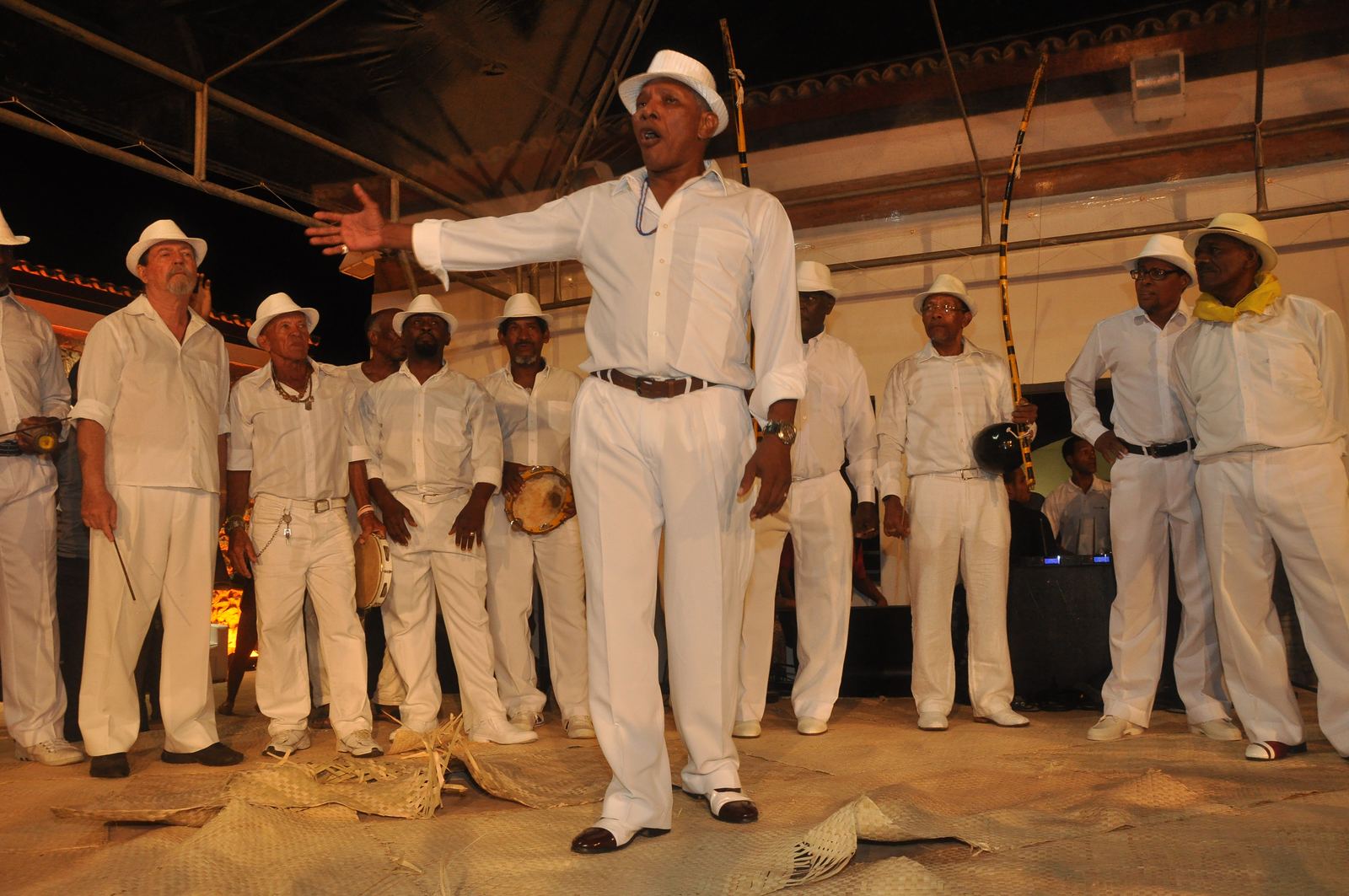
A roda of veteran mestres: Turismo Bahia, CC BY-SA 2.0
Born in Brazil
Capoeira grew in Brazil among enslaved Africans and their descendants, drawing on African movement, music and traditions. It blends self-defence movement with dance, acrobatics and game play, and over time it became one of the most recognisable symbols of Brazilian culture.
Its path was not easy. Capoeira was banned by law in 1890 and practised in secret for decades. In the 1930s attitudes changed, the ban was lifted and the art began to move into academies, schools and festivals.
The roda and its music
Capoeira is played, not fought. Two players enter the roda, a circle formed by everyone else, and trade flowing movements, spins, low ducks and cartwheels, reacting to each other like partners in a conversation. The aim is to show skill, control and cleverness rather than to hurt anyone.
Music runs the whole game. The berimbau, a single-string musical bow with a gourd, sets the rhythm and the pace. Drums, tambourines and the whole circle singing call-and-response songs give every roda its energy.
Great mestres and a global art
In capoeira, master teachers are called mestres. Mestre Bimba, born Manuel dos Reis Machado, created the faster, more athletic style called capoeira Regional and opened the first official capoeira school in Salvador, Bahia, in 1932. He also built a step-by-step teaching method that made classes easier to learn.
Mestre Pastinha, Vicente Ferreira Pastinha, became the guardian of the older capoeira Angola, which is slower, closer to the ground and deeply tied to ritual and music. He opened his own school in 1941. Many groups today teach a blend of both, often called contemporary capoeira.
In 2014 UNESCO added the capoeira circle to its list of the intangible cultural heritage of humanity. Groups now meet in parks, gyms and community centres all over the world, and students learn Portuguese songs along with the movements.
Capoeira is a fun workout for flexibility, balance and stamina, and it welcomes all ages. Many groups hold a batizado, a festive ceremony where new students receive their first cord.
Joining a capoeira group
Beginners do not need to be acrobats. First classes focus on the ginga, the basic swaying step, simple escapes and learning the rhythm of the berimbau. Flexibility and confidence grow week by week.
Expect to sing as well as move. Many groups also teach how to play the instruments, so every student becomes part of the music that keeps the roda alive. Ask about family classes, which are common in capoeira.
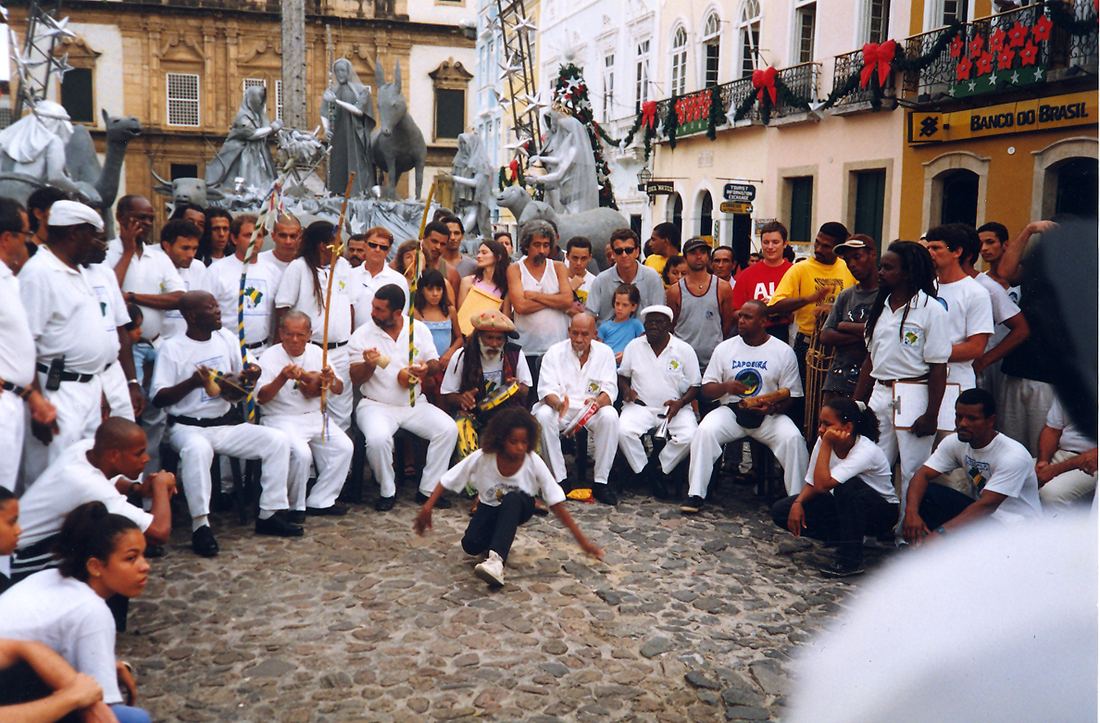
- A roda of veteran mestres: Turismo Bahia, CC BY-SA 2.0
- Capoeira in Salvador: Julia Rubinic, CC BY 2.0
Text written by Strongest Power.