Karate
The empty hand art from Okinawa. Karate grew on the island of Okinawa and spread worldwide from Japan. Its kata, sparring, main styles and its one Olympic appearance.
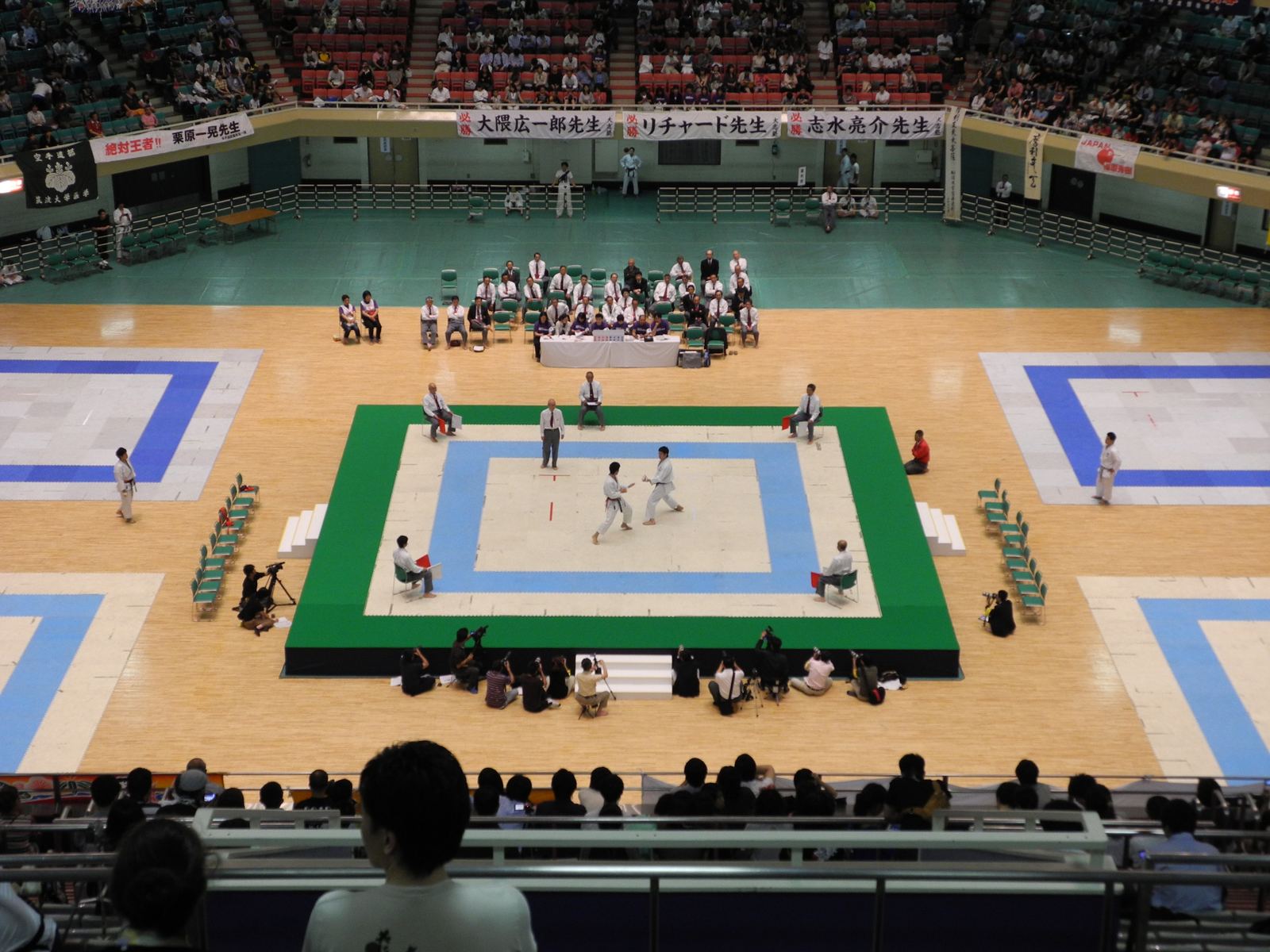
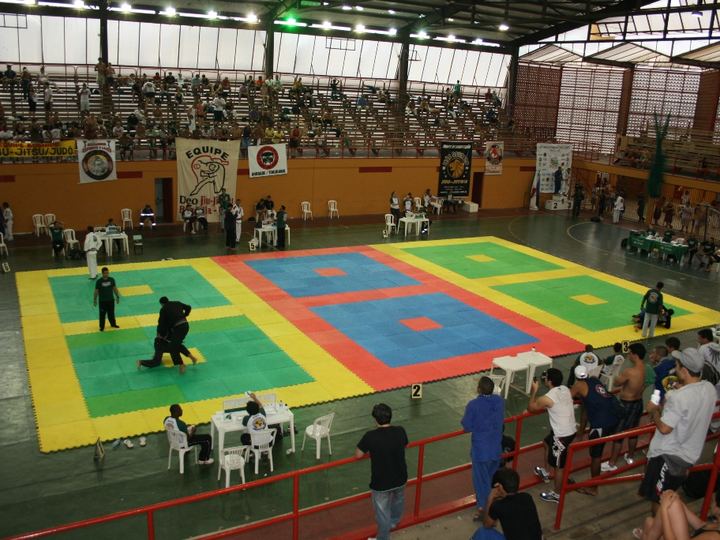
A kumite final in Japan: Douglas P. Perkins, CC BY-SA 3.0
From an island to the world
Karate took shape on Okinawa, a chain of islands south of mainland Japan, where local fighting traditions mixed with ideas from Chinese boxing over many generations. For a long time it was taught quietly, teacher to student, with no uniforms, no belts and no fixed style names.
In the early twentieth century Okinawan teachers began bringing it into schools and then to mainland Japan. Gichin Funakoshi, who gave karate demonstrations in Tokyo in 1922, is the best known of them. The written characters were later changed so that the name meant empty hand, a reminder that karate is practised without any equipment.
Training and styles
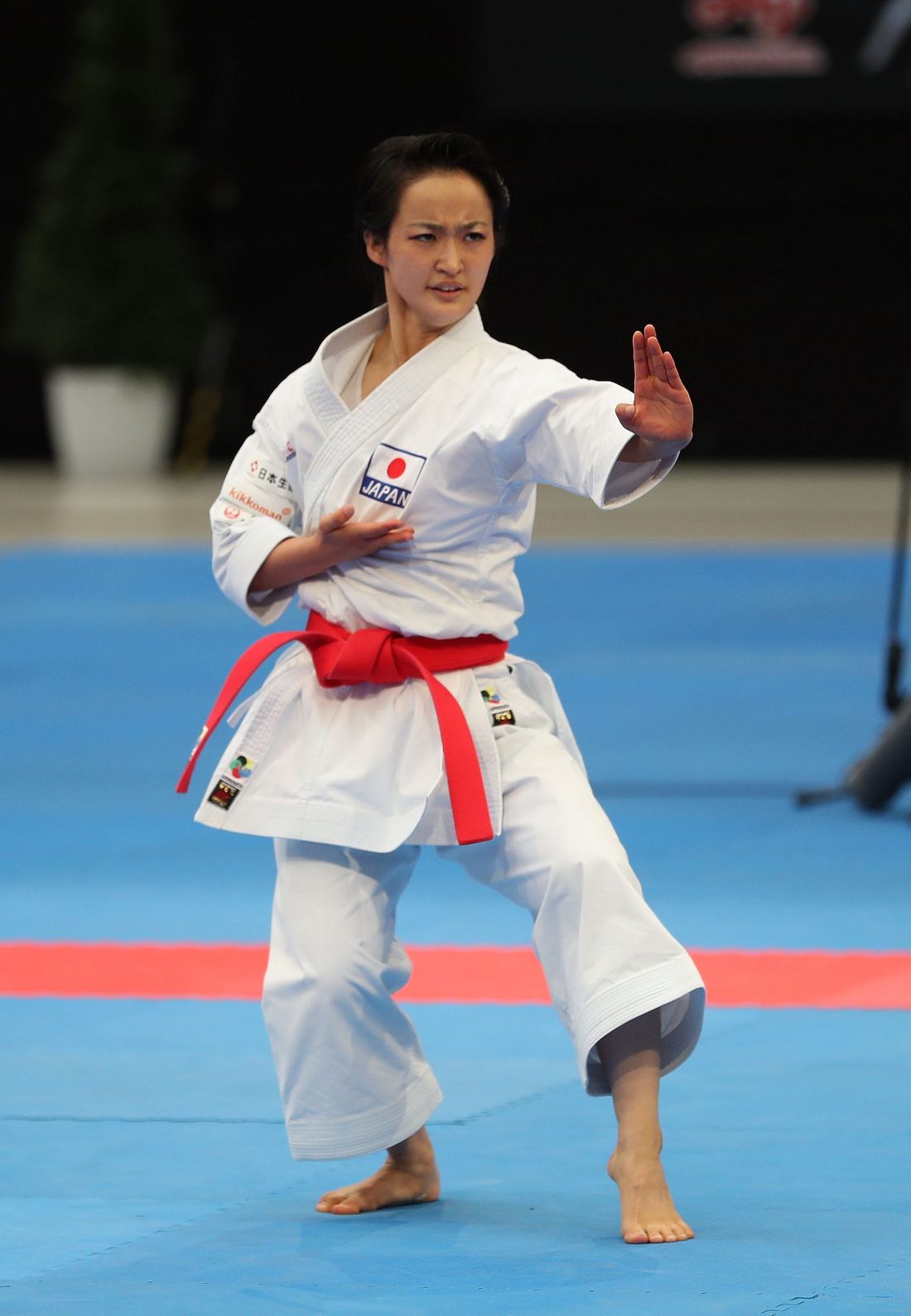
A karate class usually mixes three things. Kihon means basics: stances, footwork and blocks repeated until they become smooth. Kata are set sequences of movement performed alone, a little like a gymnastics routine, where judges look for power, balance, timing and focus.
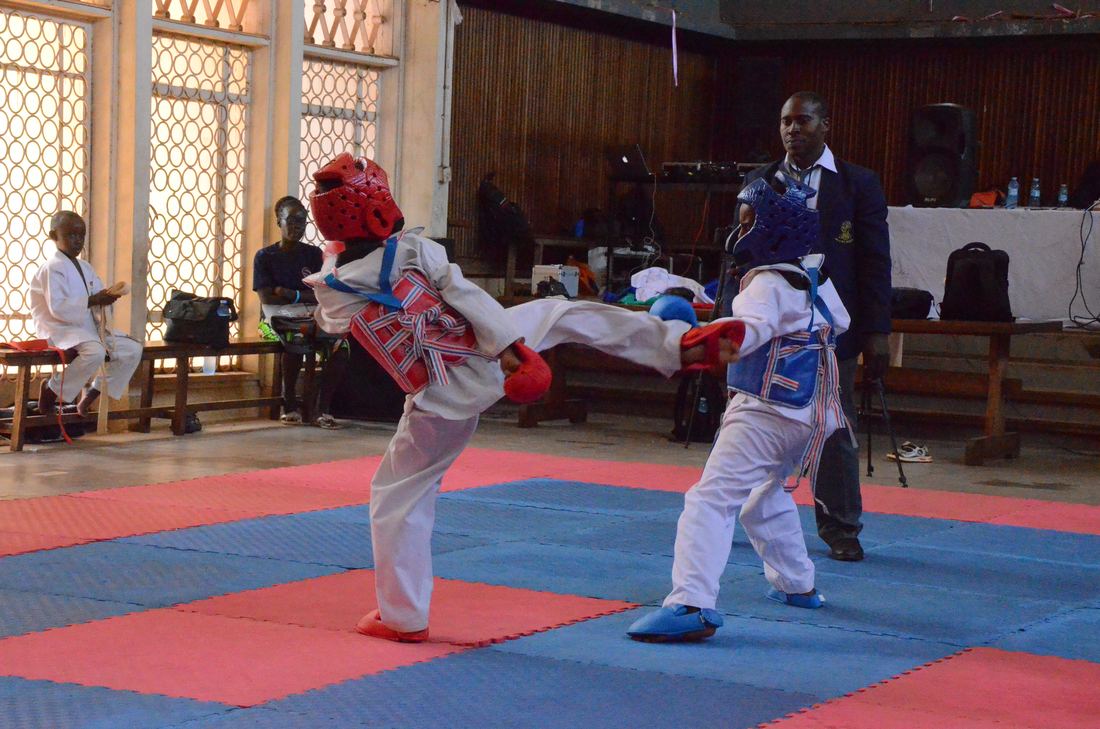
Kumite means sparring. In sport karate it is controlled and fast, with points given for clean, well-timed techniques that stop short or land lightly on scoring areas. Respect is built in: students bow when they enter the dojo, before and after every match and to their teachers.
Karate has several major styles, often called ryu. Shotokan, linked to Funakoshi, is known for long, deep stances. Goju-ryu, from Okinawa, blends hard and soft movement with steady breathing. Shito-ryu is famous for its large library of kata, and Wado-ryu adds smooth body movement influenced by older Japanese jujutsu.
Other well-known styles include Kyokushin, with its tough conditioning, and many modern hybrid schools. Every style shares the same core idea: patient practice builds a calm, strong mind as well as a fit body.
One shining Olympic moment
Karate made its Olympic debut at the Tokyo 2020 Games, held in 2021 at the Nippon Budokan. There were eight events: kata for men and women, plus three kumite weight classes for each. Japan's Ryo Kiyuna and Spain's Sandra Sanchez won the kata gold medals.
Karate was not chosen for Paris 2024 or Los Angeles 2028, but it remains huge at the World Games, continental games and world championships, with millions of students in clubs around the world.
Starting karate today
Most clubs welcome complete beginners from about age five up to retirees. A first class usually covers bowing etiquette, a few stances and simple blocks, followed by stretching and light fitness work. All you need is comfortable clothing, and a white uniform comes later.
Look for a club with a qualified, insured instructor, clear safety rules and a friendly atmosphere. Watching a class before you join is the best way to know if it is right for you.
- A kumite final in Japan: Douglas P. Perkins, CC BY-SA 3.0
- Kata in competition: Martin Rulsch, Wikimedia Commons, CC BY-SA 4.0
- Young students in class: Samson Ssemakadde, CC0
Text written by Strongest Power.