Taekwondo
Korea's high-flying Olympic sport. Taekwondo is Korea's kicking art and an Olympic sport since Sydney 2000. How matches are scored, the weight classes and the electronic vests.
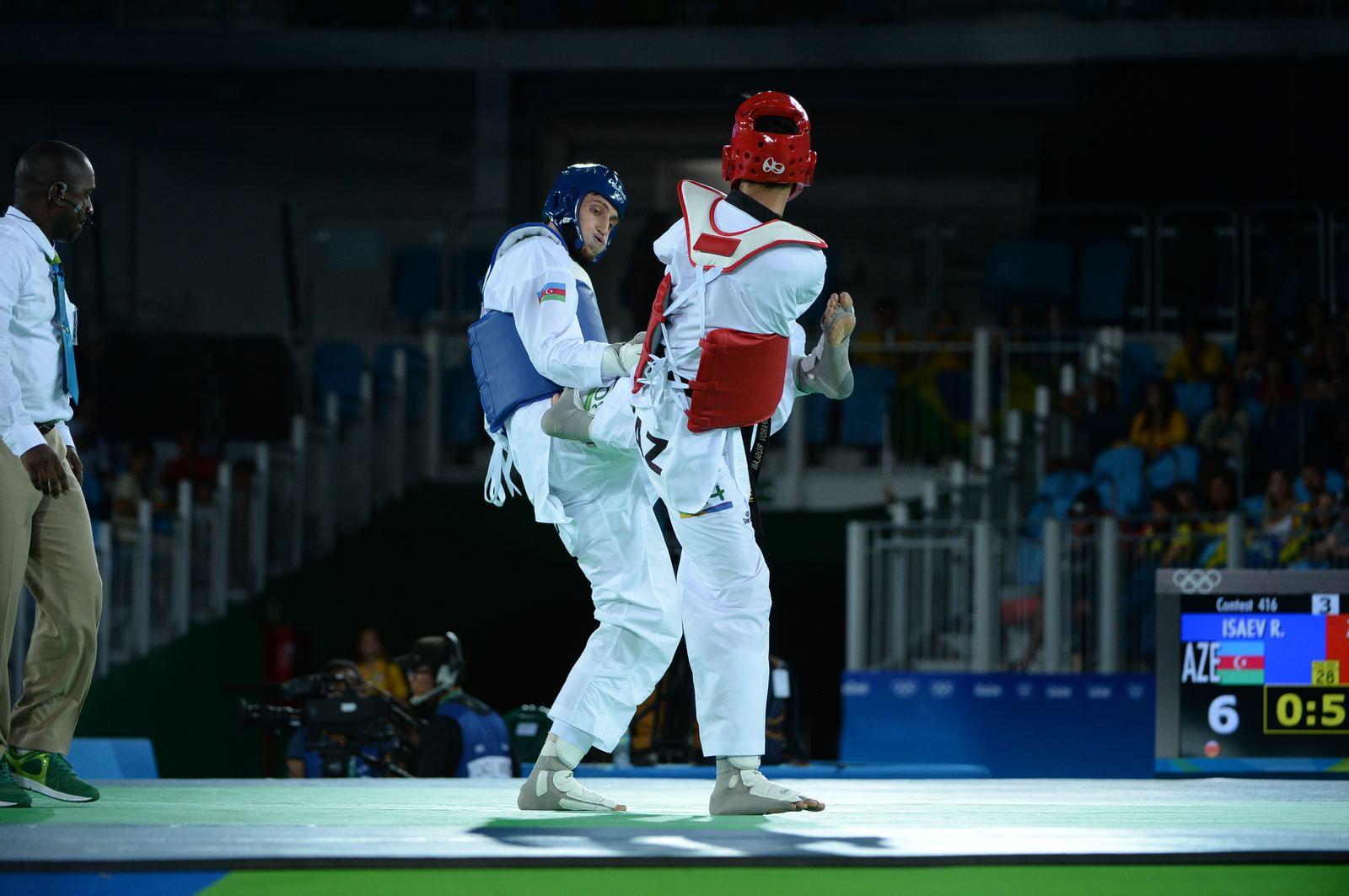
Olympic taekwondo in Rio: Ilgar Jafarov, CC BY-SA 4.0
From Korea to the Olympics
Taekwondo comes from Korea, and its name is often translated as the way of the foot and fist. It grew in the mid twentieth century from several Korean schools whose founders had studied different martial arts, and it is now practised in clubs on every continent.
Two names matter today. The Kukkiwon in Seoul, founded in 1972, is the world headquarters for training and black belt certification. World Taekwondo, founded in 1973, runs international sport competition, and it shortened its name from World Taekwondo Federation in 2017.
Taekwondo was a demonstration sport at the 1988 Seoul Olympics, where the opening ceremony featured hundreds of performers moving in unison, and again at Barcelona 1992. It became a full medal sport at Sydney 2000 and has been on every Olympic programme since.
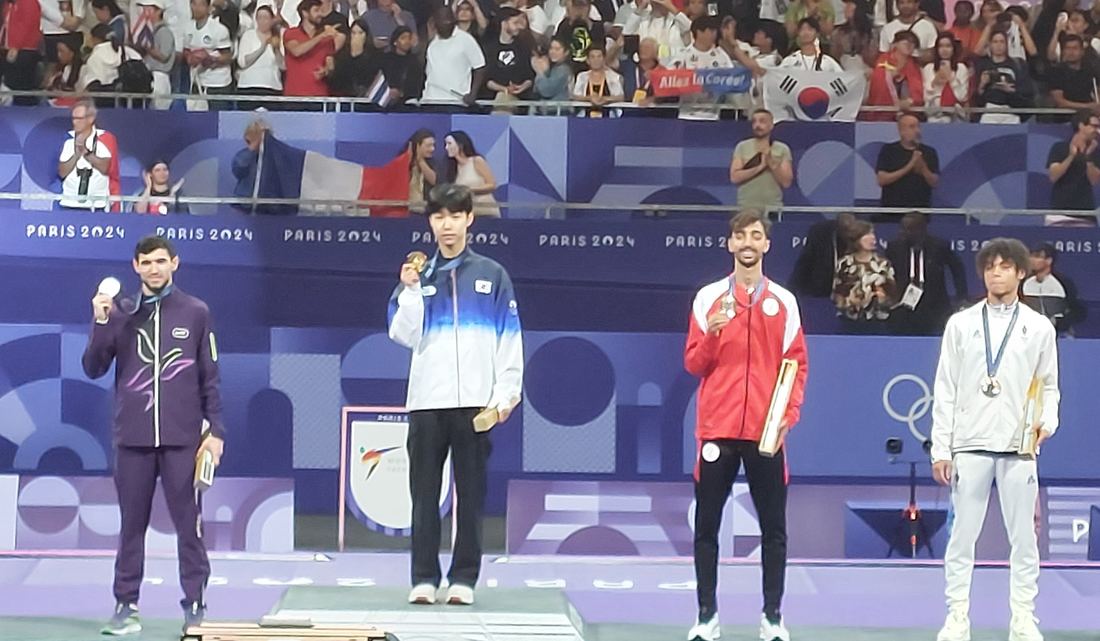
The Games feature eight weight classes, four for men and four for women. At Paris 2024 the competition took place at the Grand Palais with 128 athletes, split equally between men and women.
Scoring with electronic vests
Olympic taekwondo is famous for its speed and its spinning kicks. Athletes wear padded protectors fitted with sensors, part of a system that registers valid contact automatically, while judges add points for punches and bonus points for technical turning kicks.
Modern rules use a best-of-three rounds format, so an athlete must win two rounds to win the match. Head guards, padded vests and foot sensors are compulsory, and referees stop the action quickly to protect athletes.
More than competition
Most people who practise taekwondo never step onto an Olympic mat. In local schools, called dojang, students learn poomsae, set patterns of movement judged on precision and power, as well as flexibility drills and spectacular team demonstrations.
Classes put strong emphasis on courtesy, self-control and perseverance, which is why taekwondo is one of the most popular after-school activities for children in many countries.
Taekwondo for everyone
Taekwondo is also a Paralympic sport, first contested at the Tokyo 2020 Paralympic Games. Poomsae, the forms side of the art, has its own world championships with individual, pair and team events.
Beginners usually start in a white belt and move through coloured belts toward a first dan black belt. Children under a certain age often receive a junior black belt called poom, which converts to dan when they are older.
- Olympic taekwondo in Rio: Ilgar Jafarov, CC BY-SA 4.0
- Paris 2024 podium: Nicolas22g, CC BY-SA 4.0
Text written by Strongest Power.